

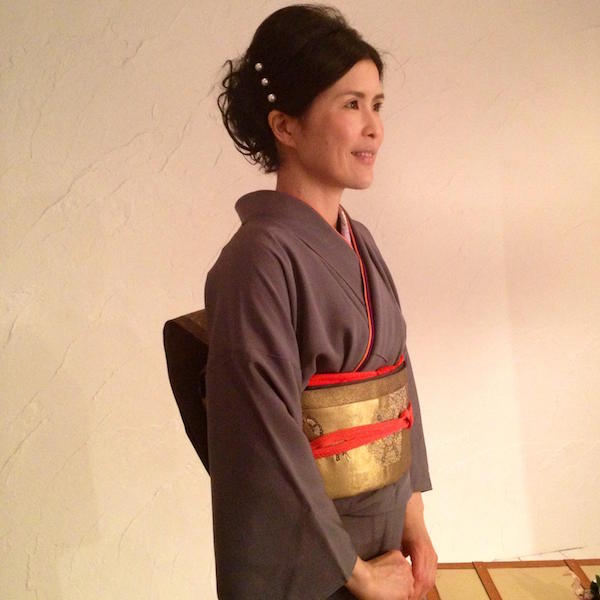
 Dr. Soko Starobin is an Associate Professor at Iowa State University. She identifies herself as a woman of color (a native Japanese and thus, non-native English speaker), a mother of two, married to a Russian man, and Jewish. She recently added another layer of identity as a cancer survivor. She finished her last radiation treatment last month and is currently on medical leave.
After an inspiring conversation between me and my dear friend about her reflections on Life, she agreed to share in our website lessons about slowing down during her tenure-track and promotion years. She particularly emphasized the significance of losing and finding her authentic self in her academic career. Below is my interview with Soko:
Q. You mentioned in our recent conversation that you lost your authentic self through tenure and promotion. What do you mean by that?
Soko: Among the multiple layers of identities, I never saw myself as a scholar. I guess I always wanted to keep myself as authentic as I could be. And yet, I was behaving and acting against my authentic self. I was trying so hard to fit in the mold of “an emerging scholar” in the academy. I was simply losing myself.
Q. What was your pre-tenure life like?
Soko: Let me share one of my FaceBook posts that captures my life then:
June 30, 2013
Maybe I should include my morning routine in my dossier (I wish, I could). Starting at 4 am – ready for breakfast (today, made bread pudding custard & soaked the bread, preheat oven to 350), did the first load of laundry, ready for lunch (wash Japanese rice & soak in the water) while editing my advisee’s chapter 5 of his dissertation. 6 am – baked the pudding, cooked rice, moved laundry to the dryer. Checking the regression results of my advisee one more time and his write-up on that. Kids’ up at 6:15am. I got ready for a full day of activities!!! We are heading to the Zoo in Des Moines!!!!
I vividly recall that morning when I posted this comment. At 4 am on the day, I was thinking of how my dossier looks while doing all the household chores. My life was hacked by a pursuit for getting tenure and promotion. I was in my early 40s with two kids (5 and 2 at that time), trying to cross the line between the ranks of assistant and associate professors at full speed.
Q. How did you lose your authentic self?
Soko: If you are a parent, you may have at least once experienced “shushing” your kids (if you have not, great! Please keep listening to your kids!). I have done this many times to my kids. I even “shushed” my inner child, who always wanted to play, laugh, cry and sleep whenever she wanted. I was not good at listening to her, especially during my tenure and promotion years. I remember I had a chance to tell one of my colleagues all the things I wanted to do while pursuing tenure and promotion – just like a little girl talking about million things she was dreaming of becoming when she grew up. I told her that I wanted to: teach my kids Japanese language; volunteer at Sunday school in the small Jewish community where I live; continue singing in a Jewish choir; take piano lessons (stopped playing during my graduate study); pick up running; and write a food & wellness blog. That was the voice of my inner child. Did I listen and honor her voice? Nope. I shushed her all those years.
Q. What was the consequence of shushing your authentic self?
Soko: So, what happens when you don’t listen to your inner child, who is your authentic self? Imagine when you don’t listen to small kids or beloved family members, including pets. They do anything to get your attention. They whine, misbehave, cry and throw tantrums. (My kids do all of the above. My cat poops outside of his sandbox.) If you continue ignoring them by shushing them, they will eventually quit acting. They lose interest in you and don’t trust you anymore. As an adult, I did not whine (OK, a little to my trusted colleagues and family members), misbehave, cry or throw a tantrum. Instead, I shushed my inner child to be quiet and was becoming someone else – someone who looks like a perfect candidate for a successful associate professor. My inner child began to distrust me and stayed away from me.
I felt heartbroken by failing to care for my inner child. I lost my identity. In fact, I was faking my identity. I pretended that I was confident. In truth, I felt so sad that my inner child who cried for attention did not receive the love and care that she deserved. I knew I needed to reconcile my relationship with my inner child. It took me a long time, but I am listening to her now.
Q. Waiting till getting tenure may be what a lot of other academics are/were trying to do… Are you suggesting that pre-tenured academics should slow down and find their authentic selves?
Soko: I love this question. My answer is “Yes,” by all means. Even before accepting your first tenure-track job. I wish someone had told me to think about the institutional fit (environment, culture, tenure process) to sustain my authentic self.
As a cancer survivor, I can confidently tell those pre-tenured academics that being their authentic selves after tenure is too late. By letting illness, including stress (especially for women of color, caretakers of young, old, sick, etc., and other marginalized scholars), hack your life for 7 years, you put yourself and significant others at a high risk. We know so well that so many scholars “age” very fast during those seven years. Some get very ill, including myself after being tenured and promoted.
Q. What was your drive to attain tenure and promotion?
Soko: During my cancer treatment and recovery, I often asked myself, “Why am I doing this?” Slowly, I surrendered myself and let go of my ego to face the real reason why I needed to get tenured. Deep down, I needed to prove to myself that I could be financially independent from my father. Growing up, I never had his “seal” of approval for anything that I had accomplished. There were more opportunities to get a doctorate and to start a professional career in the U.S. than if I were in Japan as a mother and wife.
Q. What would you suggest to pre-tenured or emerging scholars?
Soko: The point is, when you have a strong will, (regardless if you are consciously or subconsciously aware of it), none of the challenges and obstacles will stop you until you get your tenure and promotion. If you have not found your articulated and authentic reason and purpose of getting tenure and promotion, please take the time to find them. While you are searching for them, pay attention to the voice of your inner child and any changes (positive or negative) in your physical, emotional, and spiritual well-being. Do I regret what I have accomplished? No. Unless I had this experience, including dealing with cancer, I would not be able to see my authentic self. I would keep going for a rank of full professor at full speed, all out.
I thank Soko for sharing such vulnerable yet valuable stories with us. Soko’s interview reminded me of a quote by Julia Cameron, “As much as we must make a conscious effort to reach out to our children, we must also make a conscious effort to ‘reach out’ to ourselves, paying attention to our own needs and desires.” Soko emphasized that even busy academics should also slow down to meet their own inner children and listen to them.
This interview may be just one individual’s voice, but there are tons of other messages out there that align with Soko’s suggestion. Below are a few of the resources that address similar issues:
‘The Slow Professor’ By Colleen Flaherty in Inside Higher Ed April 19, 2016
Your Tenure Decision Year By Kerry Ann Rockquemore in Inside Higher Ed July 29, 2015
Should I Stay or Should I Go? By Kerry Ann Rockquemore in Inside Higher Ed June 17, 2015
Berg, M. & Seeber, B. (2013). The slow professor: Challenging the culture of speed in the academy. Transformative Dialogues: Teaching & Learning Journal (6)3.
McCoy, S. K., Newell, E. E., & Gardner, S. K. (2013). Seeking balance: The importance of environmental conditions in men and women faculty’s well-being. Innovative Higher Education, 38(4), 309.
Photo (a girl on a swing) credit to Pixabay