
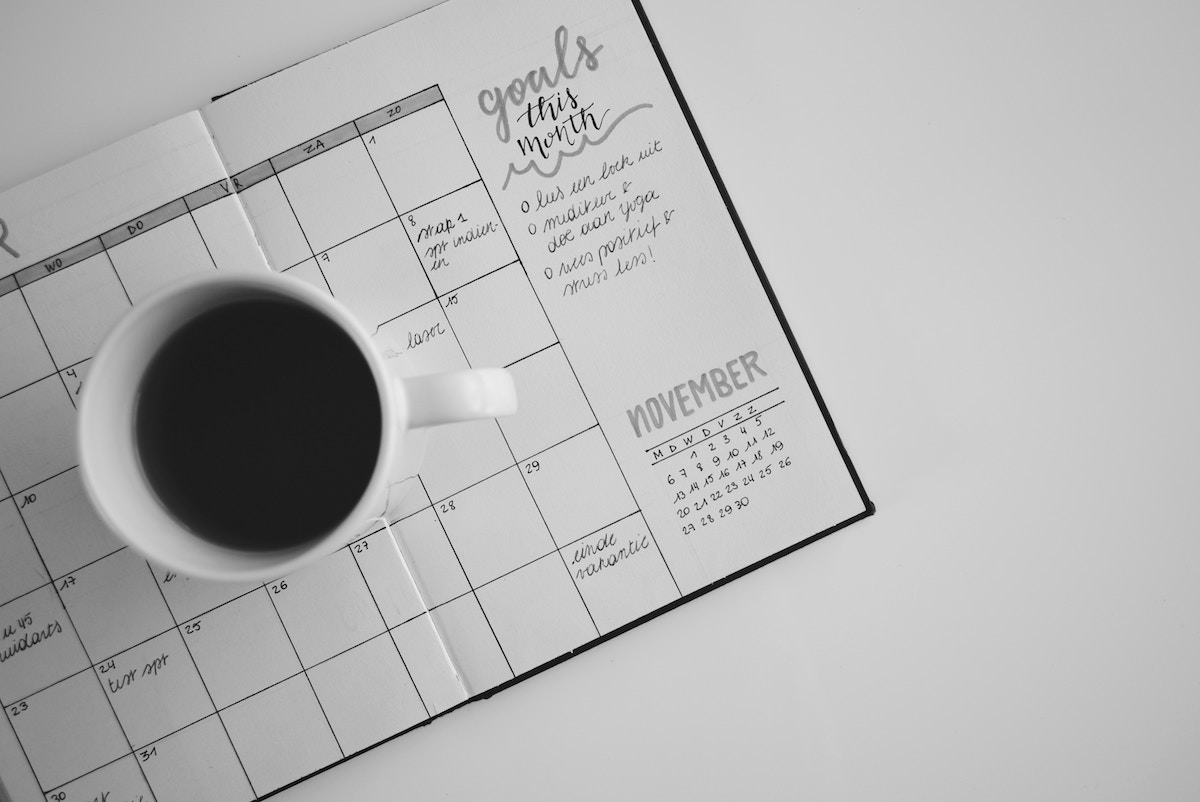
Nowadays, I do my weekly reflection and planning on Friday, not on Sunday.
I used to do it on Sunday evening after our kids going to bed. I set a timer for total 30 minutes, which helped me focus within the limited timeframe. The routine became a closure for the weekend. This worked well for the first couple of months.
At some point, my weekly planning on Sunday evening became inconsistent and unsteady. It was good when I got it done. I felt energized, at ease, and in control of my week. But my mental and emotional status before the action was an overwhelming feeling. I sometimes procrastinated and ended up postponing my weekly planning till Monday. Other times, if I had an eventful weekend, the intensive work of weekly planning itself became burdensome at the end of Sunday. It was too much pressure for me to leave the task till the end of a weekend. Pushing myself to think about the whole week all of a sudden after unwinding on the weekend became a source of agitation.
My partner first started doing it on Friday, instead of Sunday. I later joined him. I realized that Friday is a much better day for weekly planning. And I recommend you try your weekly planning on Friday, preferably in the morning. Here are 4 reasons:
1. More effective and efficient in reviewing and planning
Before planning the next week, I also review and reflect on the current week, which is as important as planning.
On Friday, because you are just ending the week, you would still have vivid memory of how it has gone by. You might ask questions like: How do I feel about this week? What were my gains? How was my writing progress? What got in the way of my productivity? Did I sleep well this week? Did I spend too much time for class prep (for faculty) or a single assignment (for grad students)?
This reflection becomes a ritual for closing the workdays before the weekend begins, and a time to celebrate one’s achievements. In doing so, you could actually send a message to your brain and body, “I am crossing the border between a work day and a non-work day.”
Your strategic plans resulting from the reflection of the week can immediately be applied to your schedules for the following week. Because your work mode is still on, you would know exactly where you will restart your writing tasks or teaching prep on Monday and can better estimate how long each goal would take.
Whereas, If you have to think about specific tasks to tackle for the upcoming week on Sunday, it takes time and energy for you to rewind the memory and get on the rhythm of thinking about your work. This sudden gear shift would not be as smooth when your engine has been off.
Due to your TGIF mind, you could still think about an unwanted task in a relatively positive way. For wanted tasks or events, you would be excited about the week to come.
2. Extra time to adjust and confirm schedules with others
If you do weekly planning on Friday morning, you could still make or change appointments and add a lunch meeting if you want to. In other words, when you still need to make adjustments in your weekly plan, you still have time to do so.
Contacting your colleagues, students, or faculty before Friday evening aligns with no-email-on-weekend policy. You could also give enough time for the other party to make the adjustment as well.
For instance, you might want to change the start time of a meeting with your student/colleague because you realized you had a dentist appointment at the same time. You could still cancel your doctor’s appointment for Monday without penalty. If you realize your overlapping appointments while planning on Sunday, it might trigger a panic or aggravation before going to bed.
3. Better quality weekends
Now that you reviewed and reflected on the week and can predict your schedules for the next week, you can make plans for the weekend accordingly. You can be more intentional about things you want to do or don’t want to do during the weekend.
When you had such a busy week with little rest, you might want to catch up on sleep during the weekend. If you need alone time on Sunday for self-care, you could negotiate it with your partner especially if you have children. If a stressful week is coming up or in order to catch up, you may want to allocate a couple of hours for work on Saturday morning and plan other fun things in the afternoon.
Friday weekly planning has also provided me with more ease and peace during the weekend. This allowed me to focus and enjoy the downtime with my family. When I was doing my weekly planning on Sunday, I sometimes started thinking about the following week during the weekend. Not having the tangible plans mapped out and written down somewhere, I felt uneasy and unresolved. I could not be mindful of what I was doing with my family.
4. Sunday-evening blues being eased
As a result of getting my weekly planning done on Friday, I hardly have Sunday evening blues, which I used to have regularly. With my weekly plan done way before and the quality weekend spent, I can put more of my energy on reflecting on the weekend and peacefully transit from a weekend mode to a get-ready-for-the-week mode in the evening without stress about planning. Asking our family and myself, “How was your weekend? What was your most memorable event on the weekend?,” I bring my weekend to an end and go to bed with peace of mind.
So my partner and I do our weekly planning the first thing in the morning of Friday even before writing. It’s not that I should finish everything for the week by Thursday. But, it is more like creation of an environment/system whereby I can make weekly planning easier and less stressful and be more responsive rather than being reactive. It is a key to staying excited about what I love to do and to reducing stress over what I feel anxious doing. Most importantly, it is a key to avoiding the negative consequences of not slowing down and enhancing the quality of the time with my family and friends. It is worth trying.
(Added on June 10, 2021)
Let me add this: I now offer the Weekly Reflection & Planning, virtual co-planning sessions, on Friday. It is sometimes hard to do this alone. If you want accountability, support, and the routine, please join us.
Photo by Estée Janssens on Unsplash