
Aches and pains are the body’s way of getting our attention. My body has been trying to get my attention for the past five years.
I have had a year-long recurring cough, unexplained aches in my joints, wonky blood pressure, and a persistent sense of dis-ease. On more than one occasion, I have spent the night in the ER with symptoms I was sure were signs of a heart attack, but ultimately were diagnosed as “panic attacks.”
This dis-ease is a sign that I have unwittingly abdicated responsibility for the care and nurture of my body. I have yet to learn that “caring for myself is not self-indulgence; it is self-preservation and that is an act of political warfare” (Lorde, 2017[1988])
Abdication
In my drive to survive the trauma of resocialization (Thomas, 2018a) and voicelessness (Thomas, 2018b) that have marked my initiation into the academy , I have gained more than 30 pounds, ignored my body’s deepest need for rest and my spirit’s longing for connection, and failed to find a ritual practice that mirrors my current frame of mind and embodied needs.
To regain the physical ground I have lost over the past five years, I needed to re-engage my body in the active pursuit of living, healing, and simply being.
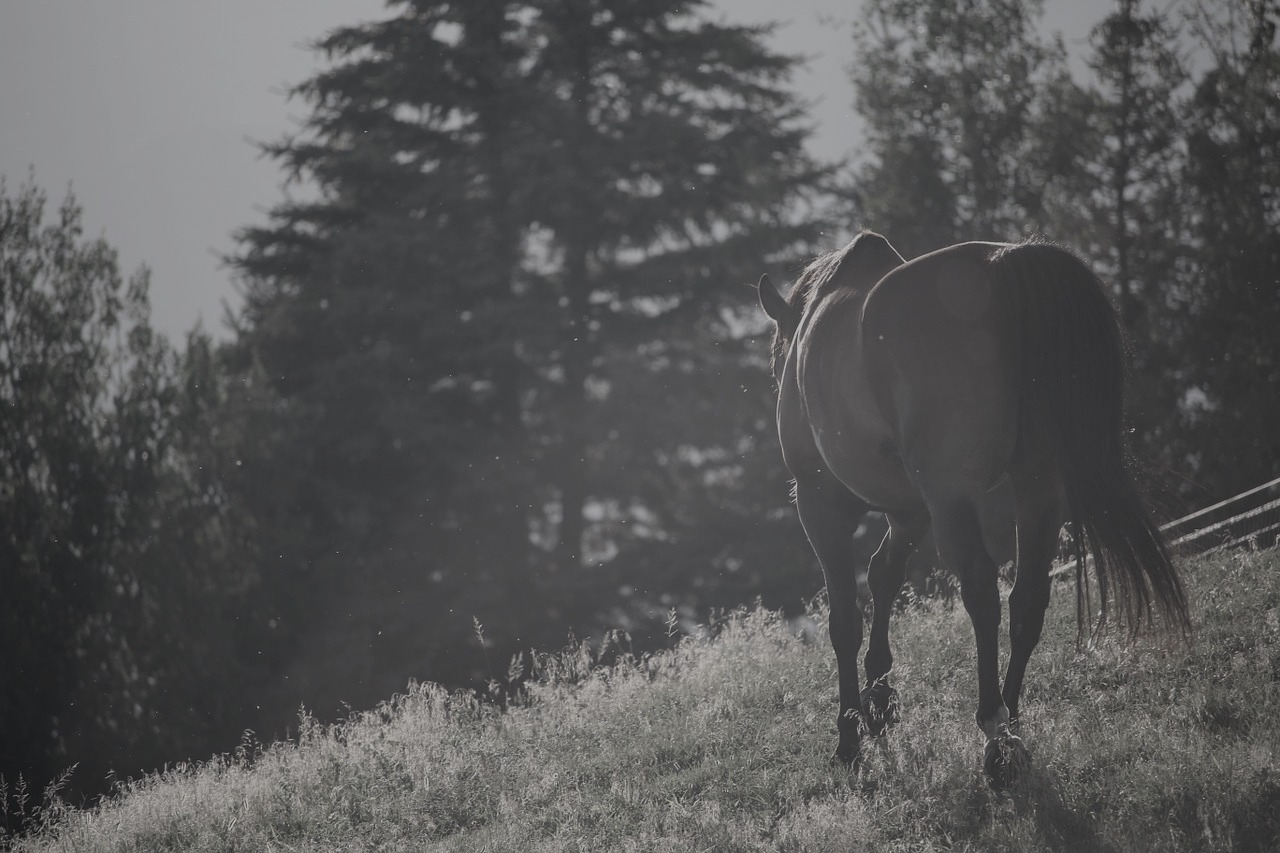
Fortunately, the body is well-aware of what it needs to heal. My body led me to the most unlikely of places for healing – a barn 15 minutes from home, a trainer and riding instructor named Becky, and a 20-something year old gelding called Rocky.
Re-embodiment
I am a city girl, the kind who shows up to a farm, not in high heels and a mini-skirt, but New Balance sneakers, a high-brow university sweater, and a car full of handi-wipes. I arrived at my first lesson “citified,” but with a spirit of openness. I told Becky we needed to start with the basics – “this is a horse.”
From Becky, I have learned to identify, categorize, and distinguish horses by gender, color, markings, mating ability, and behavior. I have discovered that horses “roll” and “pass wind” and that in the equine world, “letting it all hang out” is more than a colorful euphemism.
I have come to appreciate that riding requires the rider to be mindfully present; it is a space where the abdicated body is not only ineffective, but also dangerous to self and others. To ride safely and enjoyably, mind-body-spirit must be present in the moment.
Thus, before each ride, a ritual takes place – one where the rider pauses to align with the horse in mind, body, and spirit through a process of care and engagement called “grooming.”
Grooming
Grooming is a nose-to-tail ritual of care in which the rider predetermines the physical health and mental state of the horse. It involves combing the horse’s mane and tail, brushing the full height and length of its body, and expertly picking out the odorous mixture of organic matter that collects within the horses hooves.
These acts involve close and intimate contact with the horse. The rider checks for cuts – left behind from horse play – and prys clumps of mud from the animal’s mane. Unattended cuts and debris can cause irritation to a horse’s skin once the saddle is in place.
Grooming provides an opportunity for both rider and horse to get mentally ready for ride. Horses are incredibly sensitive to the emotional state of humans; if a rider is anxious or preoccupied with the events of the day, they will lack the power of focus to gently command, guide, and lead the horse.
Reconquest
Grooming has provided me with a new lens through which I view the care and engagement I shower upon myself daily.
My morning routine has moved beyond merely beautifying. I now carefully and actively assess my physical health and mental state daily as I shower and dress. I do so in an attempt to assess my body for the “slings and arrows of outrageous fortune” that are a part of academic life.
Moreover, these weekly trips to the barn have become my “ritual of pause” (Mirriam-Goldberg, 2018) – a sacred moment in which I engage with self and nature deeply. It is a space where my body and I are “at peace with ‘not doing’ or ‘not being productive’” and where I get to live “in the present…deprivileging the need for a result with the passage of time” (Shahjahan, 2014, p. 2).
It is a space where I am slowly winning back myself, for myself.
Featured Image Taken by Free-Photos