
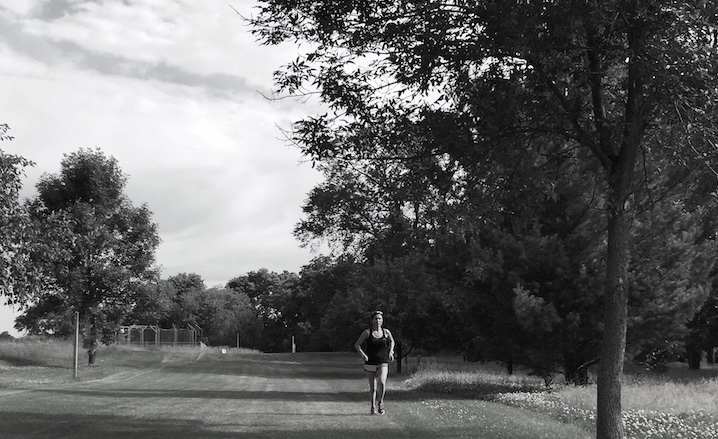
I thought I took care of my body fairly well during my tenure-track years from 2008 to 2013. I went to the gym three times per week and cooked healthy meals at home as often as I could. During those years, I thought it was normal to experience some physical symptoms like a cold, sinus infections, and neck aches. Therefore, I paid little attention to these symptoms. As I reflect back to all those symptoms and doctor’s visits I experienced, I lacked a healthy relationship with my body. My body always sent me messages, yet I never heard her respectfully – I kept ignoring her honest and sensitive signals for a very long time.
I experienced night screams on and off throughout my tenure-track years. My husband had to wake me up and calm me down every time that happened. I wondered about those night screams that usually occurred just around grant proposal, manuscript deadlines, etc.; but forgot them as soon as I completed the tasks. I also had a series of severe sinus infections and kept thinking to myself, “it’s a part of life with kids,” “it’s not a big deal,” and “I can just take some antibiotic meds.”
The consequences of ignoring such embodied messages were physically and emotionally draining. After each episode, I spent a considerate amount of time and energy to recover, but I kept neglecting the underlying symptoms and kept repeating the vicious cycle. Admittingly, I had an abusive relationship with my body.
Perhaps, I focused so much on outcomes: checking off the day-to-day tasks and meeting the deadlines. I imprisoned myself within a never-ending to-do list both at work and home like a poor rat running in a spinning wheel. I kept going like an automated human-robot driven by a high cognitive force (mind) and ignored the repeated messages sent from my body. I felt like something was always chasing me. As a deadline got close, I carried multiple senses of fear: not meeting the deadline, anticipating a rejection or harsh critique on my work, neglecting my family, and most of all, being far from my ideal self as a respected scholar, mother, and wife.
The level of fear was very high. I had to run away from it as fast as I could to protect my ideal self and perfect work-family balance. For instance, to run away from the fear of failing through my scholarship, I tried avoiding a project in front of me with every possible excuse that I could think of. To protect the illusion of my ideal self, I cleaned the house, cooked, exercised, and booked extra activities for kids. I answered email messages from my colleagues and students all in a limited time. I convinced myself that I was alright as long as I stay busy doing something and bury the fear. I was unaware that focusing on outcomes had created the fear and kept me away from receiving and accepting the messages that my body had been sending me all along. It never occurred to me that I (my mind) was an abusive partner for my body.
Fast forward to January 2017; I became more attuned to the messages from my body at any given moment. Last year, my body finally fed up with my ignorance and neglect told me that I had an early stage of breast cancer. A series of cancer treatments forced me to stop running in the spinning wheel and come out of it. In fact, the treatments were physically draining, and I had to rest. My body also allowed me to face the fear that I had pushed aside for so long. During the treatments, I suffered a far greater fear than that of manuscript deadlines, rejection of my paper, and other things–a fear of my mortality.
After the treatments, I realized that a human body is simply amazing. My body is honest, responsive and sensitive to all stimuli from inside and outside. I began to accept that I need to work on my part to foster this relationship. It has not been easy. I have to teach myself to be mindful of the messages from my body. A healthy and loving relationship requires my commitment to be proactive. I need to be an active listener. When I was running in the spinning wheel, I was reactive to the messages from my body; thus had to treat the physical symptoms. I think I finally broke the vicious cycle, and I encourage anyone to come out of a spinning wheel. No one has to go through what I did.
My meditation practices have taught me to live in a present moment and gradually release my obsession toward the ideal self and perfect outcomes. Being in a present moment allows me to connect with my body and listen to its messages with all of my mind, heart, and soul.
Nowadays, I proactively listen to the messages from my body. I can adjust my schedule without feeling guilty. Sometimes, my body agrees to go fast with me. With two small kids, weekends can be busy with house chores, social functions and birthday parties for kids, and other things that are left unattended on weekdays. I give myself permission to be busy as long as my body tells me it is OK. I do slow down after that to rejuvenate myself. Other times, my body wants me to go slow – way slower than I might think. When I am under the weather, I need to say “no” to things that I love to do, or I promised to kids that we would do together. I allow myself to find peace in mind to prioritize the message from my body. I began to trust myself that listening to the messages from my body won’t let me down, but it’s the other way around.
 Soko Starobin is an Education Consultant/Evaluator living in Ames, Iowa. She was Associate Professor in School of Education at Iowa State University till 2016. Nowadays she actively participates in educational and social justice discourses in Ames community when not running, swimming or working out in a gym. Soko was also interviewed on our past blog post.